

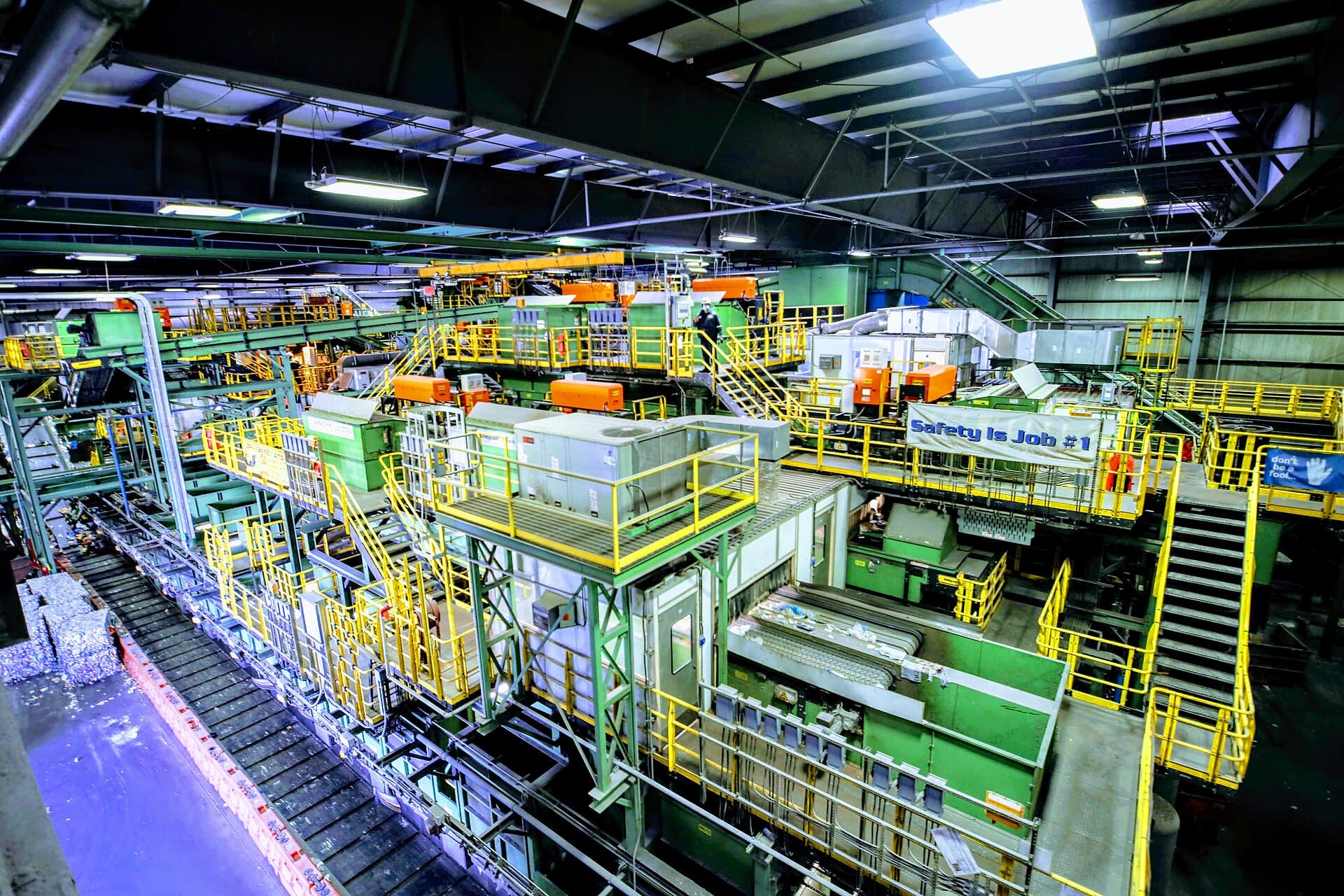
Europe did not rewrite its packaging law because recycling had failed outright. It acted because waste kept growing despite better collection, while diverging national rules were making a single market look increasingly fragmented. PPWR therefore works on two levels at once: it is environmental law, and it is a new product rulebook for packaging sold in Europe.
01 / THE PROBLEM
Europe Was Producing More Packaging Faster Than It Could Fix the System
In 2023 the EU generated 79.7 million tonnes of packaging waste: 177.8 kilograms per resident. That was 8.7 kilograms below the exceptional 2022 level, but still 21.2 kilograms above 2013. Better recycling did not cancel the growth in material entering the system.
That distinction matters. Recycling manages packaging after use; prevention asks whether the same function could be delivered with less material, less volume or a structure that remains valuable for longer. PPWR places both questions upstream, where a format, coating, insert and logistics plan are still design choices.
EU Packaging Waste per Capita
The official series rises from 156.6 kg in 2013 to 177.8 kg in 2023, with a 190.17 kg peak in 2021.
02 / HOW WE GOT HERE
From Proposal to Law: The PPWR Timeline
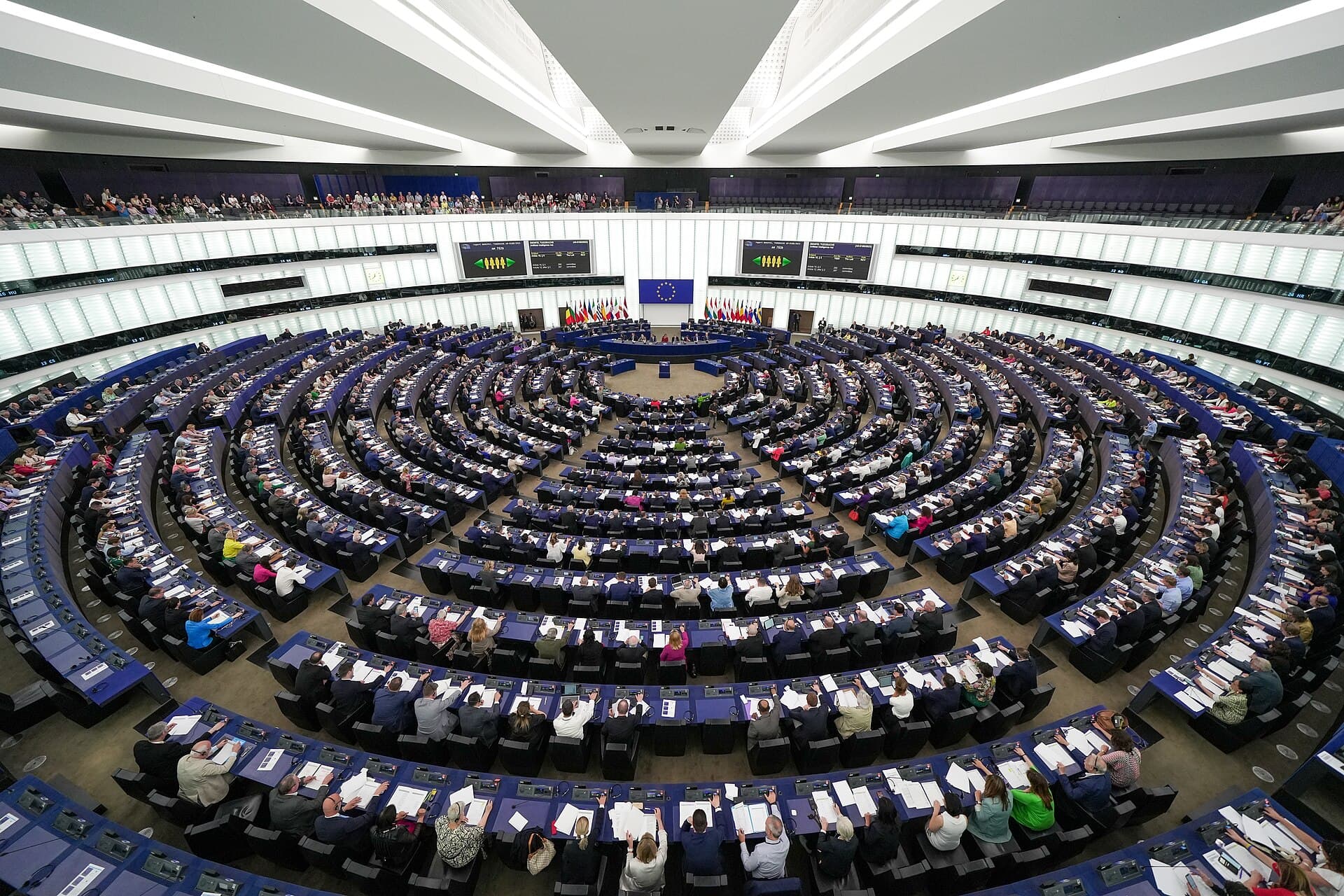
The Commission proposed replacing the 1994 directive on 30 November 2022. Parliament set its negotiating position a year later; Parliament and Council reached a provisional deal on 4 March 2024. After both institutions adopted the text, Regulation (EU) 2025/40 was published on 22 January 2025, entered into force on 11 February 2025 and became generally applicable on 12 August 2026.
Commission proposal
Parliament negotiating position
Provisional political agreement
Parliament adoption
Council adoption
Published in the Official Journal
Entry into force
General application
Design, labelling, reuse and reduction milestones
Fact check: The regulation now applies, but many operative details and deadlines phase in later. “PPWR applies” does not mean every 2030 obligation is already due.
03 / WHAT THE LAW IS REALLY TRYING TO DO
Is PPWR Really About the Environment?
Yes — but that is only part of the story.
Environmental policy
PPWR combines prevention, reuse where appropriate, recyclability, recycled content and better collection. The legal hierarchy matters: avoiding unnecessary packaging sits beside improving what happens to packaging after use.
Internal-market policy
A regulation applies directly across Member States, unlike the previous directive that required national transposition. One harmonised framework is intended to reduce contradictory labels, restrictions and market-access conditions across the EU.
Industrial policy
Sustainability is moving from a marketing claim into an engineering constraint. Board grade, barrier, adhesive, insert, print finish, pack volume and disassembly can all affect a packaging system’s performance and compliance case.
Economic policy
The rules may reshape demand for secondary raw materials, sorting infrastructure and reuse networks. Extended producer responsibility also makes data and end-of-life cost more visible in sourcing decisions.
04 / THE POLITICAL ARGUMENT
Everyone Agreed Packaging Waste Was a Problem. They Did Not Agree on the Solution.
Parliament: ambition has to survive implementation
“Environmental ambition meets industrial reality.”
That was rapporteur Frédérique Ries’s concise description of the negotiation. Her framing captures the compromise: harmonisation and waste prevention had to become enforceable without ignoring food safety, logistics or technically distinct packaging formats.
Verified quotation: European Parliament press release, 24 October 2023.Prevention and reuse: recycling alone cannot shrink the waste stream
Parliament’s debate repeatedly separated recycling from prevention. Recyclability can improve the destination of a pack; it does not by itself reduce the quantity placed on the market. Reuse advocates therefore pushed for binding systems and targets where return logistics can work.
Lifecycle reality: reusable is not automatically lower impact
A reusable format must complete enough rotations to repay its extra material and the impacts of return transport, washing and losses. The answer changes with distance, load efficiency, collection rate, material and energy mix. That is why lifecycle evidence should test a specific system — and why the regulation includes format-specific exemptions rather than treating every package alike.
05 / WHAT CHANGES FOR PACKAGING
Six Changes Packaging Buyers Can No Longer Ignore
Less packaging
Weight and volume must be minimised while preserving functionality. For grouped, transport and e-commerce packaging, Article 24 sets a maximum 50% empty-space ratio from 1 January 2030 or the later implementing deadline. Paper cuttings, air cushions, bubble wrap, foam, wood wool and loose-fill chips count as empty space — they do not make the void disappear legally.
Design for recycling
From 2030, packaging must meet design-for-recycling performance grades A, B or C; the lowest qualifying threshold is 70%. Assessment at scale joins the test from 2035. From 2038, grade C packaging can no longer be placed on the market. Detailed criteria will arrive through delegated measures, so current design decisions need a record of assumptions.
Material composition matters
The outer sheet is not the whole pack. Laminations, barriers, adhesives, inks, windows, closures and inserts can change separation and recycling yield. “Paper-based” describes a dominant substrate; it does not prove system-level recyclability.
Reuse — but not everywhere
Article 29 sets a 40% reusable share for specified transport and sales packaging from 2030, plus separate grouped-packaging and beverage targets. But cardboard boxes are expressly exempt from the transport-packaging reuse obligations, alongside several safety- or application-specific cases. PPWR does not require every corrugated shipper or rigid box to become reusable.
More harmonised labels
A harmonised material-composition label is scheduled from 12 August 2028 or 24 months after the relevant implementing acts, whichever is later. Waste receptacles follow a corresponding harmonised system. The practical design files cannot be finalised until the implementing specifications are settled.
Documentation becomes part of the product
Manufacturers need technical documentation and a declaration of conformity. For buyers, this raises the value of a traceable specification: materials, weights, components, supplier evidence, recyclability reasoning and the design decisions that produced the final pack.
PPWR Packaging Waste Reduction Targets
Per-capita targets, compared with packaging waste generated in 2018.
06 / MATERIAL REALITY
Does PPWR Mean ‘Replace Plastic With Paper’?
Not necessarily.
The direction is not PLASTIC BAD → PAPER GOOD. A more credible sequence is LESS MATERIAL + RIGHT MATERIAL + RECYCLABLE DESIGN + FUNCTIONAL PERFORMANCE + VERIFIABLE COMPLIANCE. Fibre can replace plastic successfully in many inserts, trays and secondary packs. In other applications, moisture, grease, oxygen, sealing or food-contact requirements make a barrier essential.
The engineering question is whether that barrier, coating or laminate preserves function without undermining the recycling route. Fibre sourcing also matters, as does what collection and sorting infrastructure actually accepts. Paper-based is a useful description. It is not a compliance certificate.
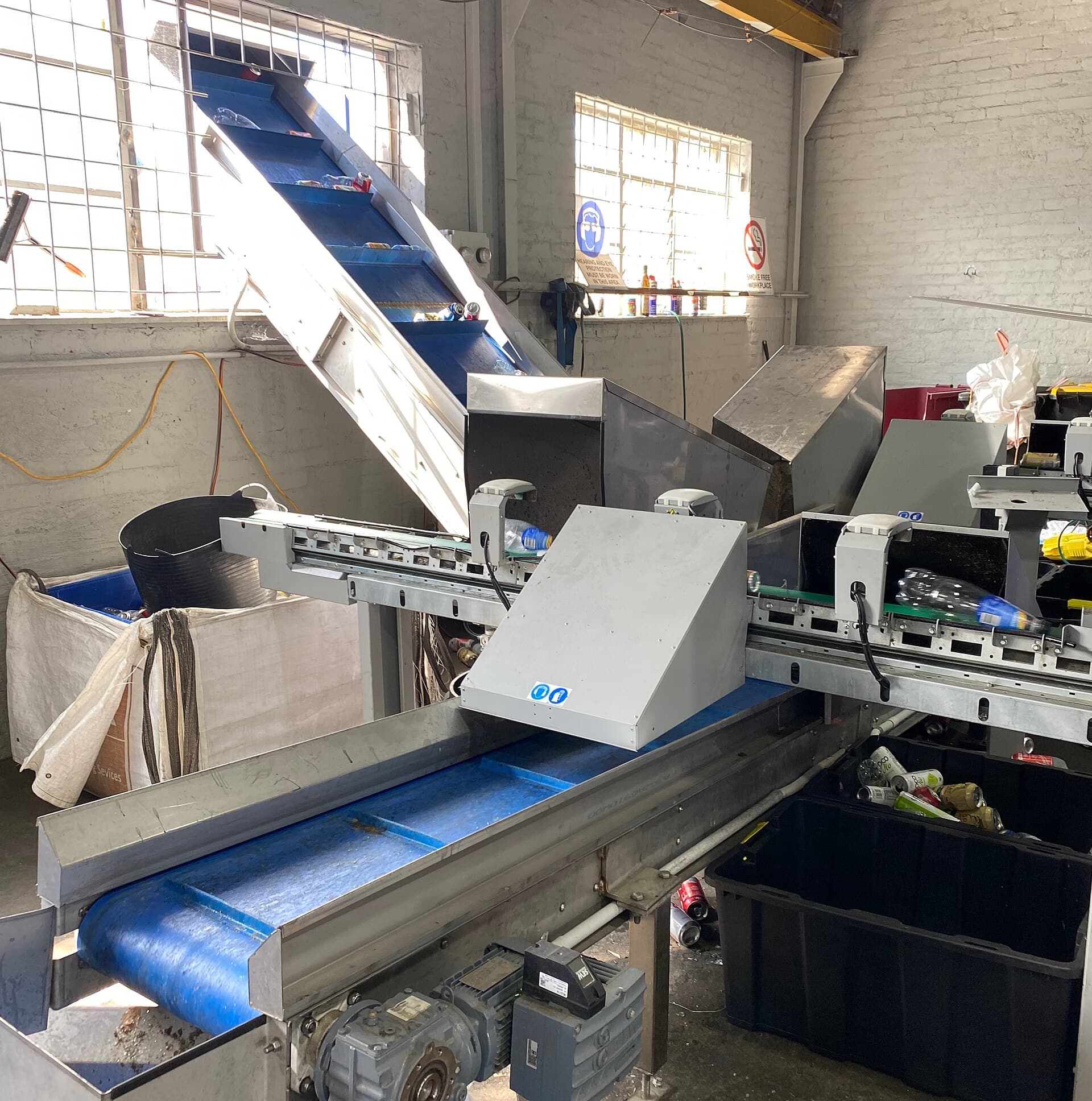
Where EU Packaging Waste Comes From
07 / BUYER CHECKLIST
What Should Brands Ask Their Packaging Suppliers Now?
- 01Can this structure use less material without losing protection?
- 02Is the empty space actually necessary?
- 03Can the materials be separated and recycled?
- 04Are laminations or coatings affecting recyclability?
- 05Can inserts be redesigned in paper or fibre where appropriate?
- 06Can the supplier document material and structure choices?
08 / FROM REGULATION TO PACKAGING ENGINEERING
What This Means for Packaging Development
The supplier brief is changing from “make this box” toward “develop packaging that balances protection, presentation, material efficiency, recyclability and compliance.” That does not turn a packaging factory into a law firm. It does make structural development, material records and sampling discipline more important.
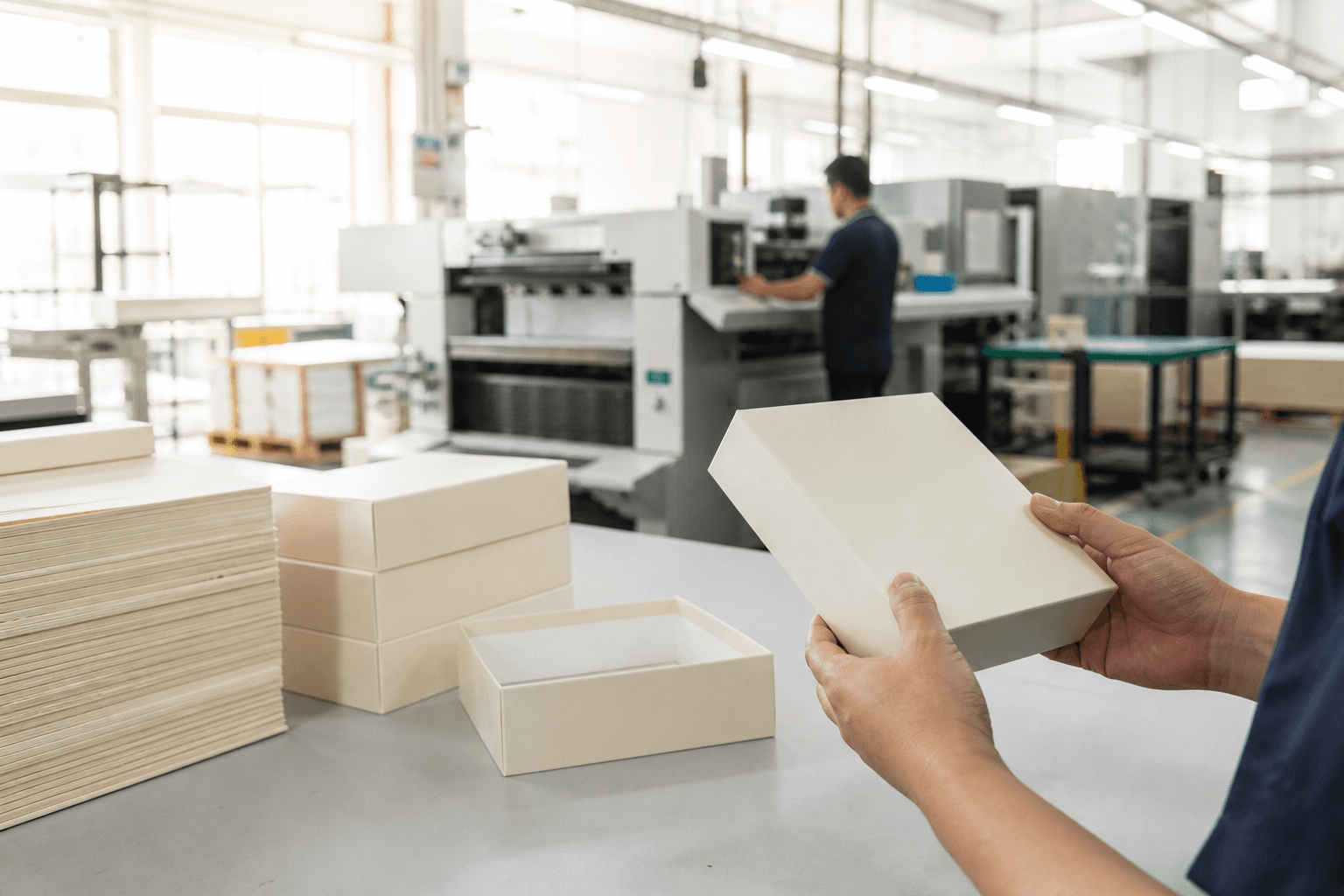
For a VARNEN project, the practical work can include structural development, material selection, printing and finishing, insert engineering, production and quality inspection. The objective is not to promise compliance from a photograph; it is to create a better-documented design that can be tested against the buyer’s product, market and legal obligations.
SOURCES
Sources & Further Reading
- Regulation (EU) 2025/40 — official legal text
- European Commission — Packaging and Packaging Waste Regulation
- Council of the EU — final adoption, 16 December 2024
- European Parliament — negotiating position, 22 November 2023
- European Parliament — final vote, 24 April 2024
- Eurostat — 2023 packaging waste statistics
- Eurostat dataset env_waspac — methodology
- European Commission — 2026 PPWR guidance
Photo credits
Editorial note: This article is intended for general information and packaging-industry discussion and does not constitute legal advice. Regulatory requirements may depend on product, packaging format, market and implementation measures. Businesses should consult current official EU guidance or qualified advisers where necessary.